The History of Block Making: Why Blocks Came into Being?
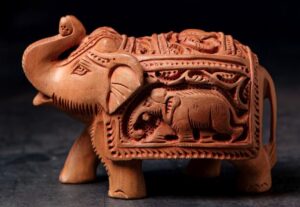
The story of block making begins with a human desire to repeat beauty – to create patterns that could travel across cloth, walls, and time. Long before machines existed, artisans sought ways to reproduce motifs with consistency while retaining the warmth of the handmade. This impulse gave rise to wooden printing blocks, meticulously carved tools that transformed individual gestures into rhythmic patterns. In regions such as Rajasthan and parts of western India, block making evolved alongside textile traditions, responding to both cultural expression and practical need. Natural surroundings—flowers, vines, animals, celestial forms – became the visual vocabulary, encoded into wood so that stories could be printed again and again.
The why of block making is rooted in accessibility and community. Hand-carved blocks allowed designs to be shared beyond royal ateliers, reaching everyday garments, ritual textiles, and domestic spaces. Cloth became a moving canvas – worn, gifted, traded—carrying identity and symbolism across regions.
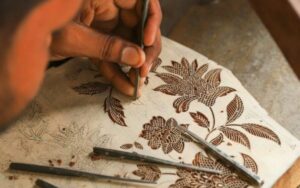
The how is an act of deep skill and patience: seasoned wood is carefully selected, designs are drawn by hand, and artisans carve negative space with chisels so that raised surfaces receive dye. Each block is a mirror of the artisan’s precision; even a slight variation in pressure or alignment introduces subtle uniqueness into every print. Over time, sets of blocks were created to layer colours and details, turning repetition into a form of quiet complexity.
From an artistic perspective, block making sits at the intersection of design, sculpture, and performance. The carved block is both object and instrument, while the act of printing becomes a choreography of hand, pigment, and cloth. In a contemporary world driven by speed and uniformity, the history of blocks reminds us that repetition need not erase individuality – it can amplify it.
At Upahaar Box, we honour this legacy by celebrating block traditions not merely as techniques, but as living histories – where every impression carries the memory of the hand that carved it, the culture that shaped it, and the timeless human urge to make, mark, and share beauty.